|
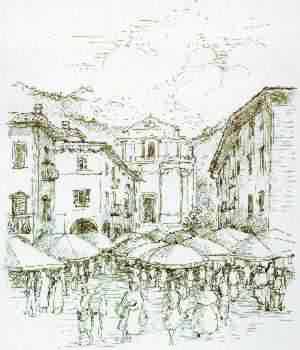
Pisogne per la sua posizione fu, sin dal Medioevo, emporio del commercio di tutta la valle e sede di un grande mercato settimanale che acquisì ancora maggiore importanza nel '600. Il mercato si teneva nella grande piazza detta appunto del Mercato che, fino all'inizio del secolo scorso si affacciava direttamente sul porto dato che il lago allora raggiungeva quasi la torre. I portici che affiancavano la Piazza del Mercato erano dotati di fondaci tra di loro collegati così da essere in comunicazione con l'attraccatura del porto che giungeva dove attualmente è l'edificio della banca S. Paolo.
Pisogne, because of its location, was in medieval times a centre of commerce for the whole of the valley and the place of a large weekly market, that increased in importance in the 17th century. The market was held in the large square, actually called Market Square, which up until the beginning of the last century was directly on the port, given that the lake in that time almost reached the tower.
The arcades flanking Market Square had vaulted stockrooms connected to one another in order to reach the port moorings located where the Bank S. Paolo now stands
|
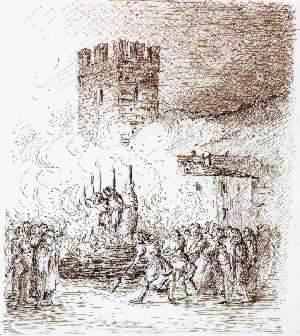
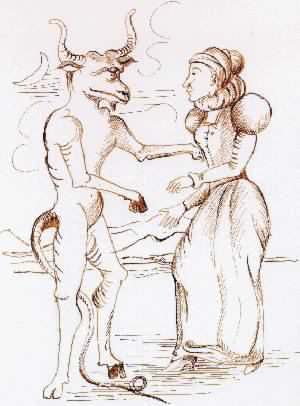
Si vuole che nel 1518 siano state tenute prigioniere nella Torre del Vescovo otto donne camune accusate di stregoneria.
Dopo essere state sottoposte ai terribili interrogatori del vicario dell'Inquisizione, prete Bernardino dè Grossis, inviato della Repubblica Veneta per indagare sul fenomeno della stergoneria diffusosi in quel tempo in Val Camonica,
esse furono bruciate vive sulla Piazza del Mercato.
It is believed that in 1518 in the bishop's tower eight women were held, accused of witchcraft, a practice quite widespread at that time in Valle Camonica.
After being subjected to terrible interrogations by the deputy of the Inquisition, a priest called Bernardino de' Grossis, sent by the Venetian Republic to investigate the matter, they were viciously burnt alive in Piazza del Mercato.
|
|
|
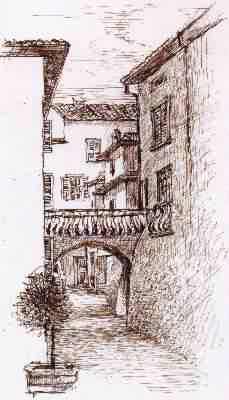
Via S. Clemente è un vicolo medioevale che, dalla Piazza del Mercato raggiunge l'antica chiesa di S. Clemente ormai sconsacrata ed alterata dall'inserimento di altri fabbricati: di questa chiesa è oggi riconoscibile un breve tratto della parete laterale che chiude il vicolo. Su Via S. Clemente si affacciava un grande complesso di case fortificate che si estendeva anche all'area di Via S. Marco. Di questo complesso, rimaneggiato attraverso i secoli, è ancora visibile un torricello che mostra il piede a scarpate a conci grossi ed irregolari.
Via S. Clemente is a medieval street reaching from Piazza del Mercato to the ancient church of S. Clemente. The church is now deconsecrated and altered by the addition of other buildings, and all that is recognisable today is a small section of wall which closes the alley. In Via S. Clemente one could have seen a large complex of fortified houses that extended to the Via S. Marco area.
Some large irregular rocks which formed the base of a small tower are all that is still visible of this complex modified throughout the centuries.
|
|
Pare che il Vescovo punisse chi non riusciva a pagare le tasse mettendolo alla gogna in una gabbia fissata alla torre.
Questo tipo di supplizio era usato dai principi ecclesiastici ai quali, a causa del loro ministero, era proibito applicare punizioni che prevedessero spargimento di sangue.
It appears that the Bishop punished those who couldn't pay the taxes by imprisoning them in a cage fixed to the tower and subjecting them to public ridicule.
This kind of torture was used by the ecclesiastical princes because their ministery prevented them from administering punishment by the loss of blood.
|
|
|
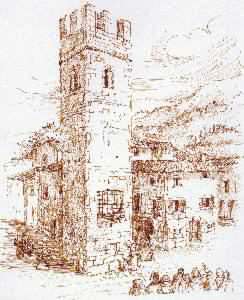
Sulla Piazza del Mercato prospetta la Torre del Vescovo o torre grande detta anche Pegul. Fu eretta nel 1250 per volere del Vescovo di Brescia di cui Pisogne era fondo. Il Vescovo teneva in Pisogne l'avvocato, il boia ed un commissario che risiedeva in una casa fortificata: il Torazzo, ormai scomparso. Al Vescovo i cittadini pisognesi dovevano pagare i diritti sulla pesca, sulla caccia, sul sale, sui molini e sul ferro. La torre, lambita da una vasta zona paludosa e con la sua robusta mole di pietra scalpellata, doveva essere, a quei tempi, un baluardo inespugnabile. L'accesso alla Torre è situato nel cortiletto interno di un antico edificio dell'attiguo Vicolo S. Clemente.
In the Piazza del Mercato (Market Square) stands the Torre del Vescovo (Bishop's Tower), also called Pegul. It was erected in 1250 by decision of the Bishop of Brescia, of whose bishopdom Pisogne was a part. The bishop maintained in Pisogne a lawyer, an executioner and a "gastaldo" (chamberlain) who resided in a fortified house, the Torrazzo, today no longer in existence. The population of Pisogne had to pay duties on fishing, hunting, milling, salt and iron to the Bishop.
The tower, at the time edged by a large marshland area and with its strong stonework, was an impregnable fortress. The access to the tower is now situated in the internal courtyard of an ancient building of the adjoining Vicolo S. Clemente (St. Clement Alley).
|
|